
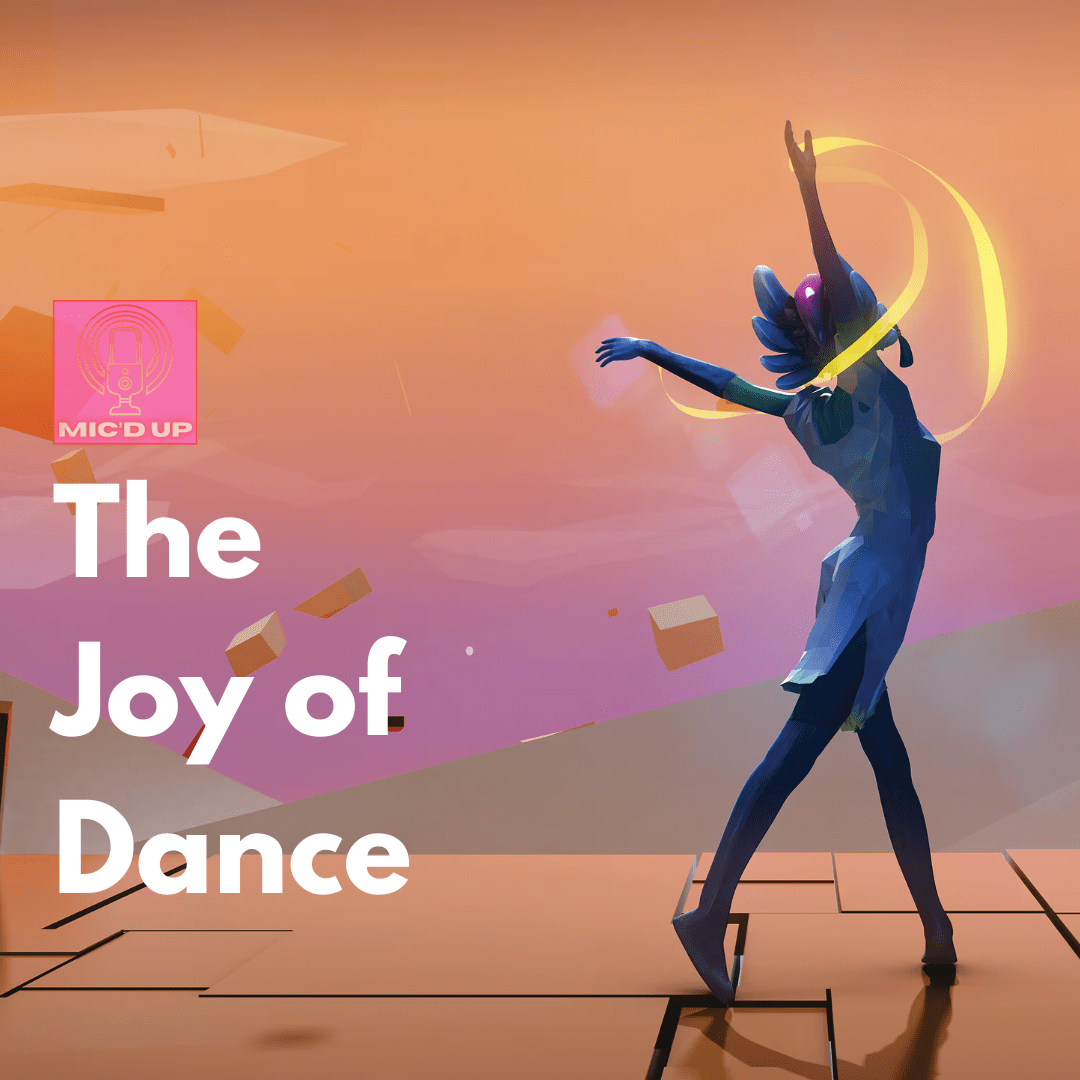
There’s always those games that people consider ‘arty’ – the critically acclaimed, triple quadruple award winning ones that seem to capture everyone’s unflinching attention for a singular moment in time before being shuffled back to the video game hall of fame. I would really love this to not be the case here.
‘Bound’ is a game I can’t stop thinking about. Un-apologetically arty, but with a heart that’s undeniable.
In list features, articles, opinion pieces, you often don’t see the game mentioned. Sure you’ll get the initial positive reviews praising its artistic merit and original flare (as well as the Polityka Passport Polish cultural award that it won – que polite nods of approval) but after that people seem to forget it exists.
On the other hand, I find myself periodically looking back on it, trying furiously to work out exactly what it is that captured me. In typical fashion of my overactive brain though, I overthought it massively when in reality, the captivating nature of this game comes down to something very simple. Space.
The thing is, space is process.

The Summary:
Take the reins of a nameless protagonist, a pregnant woman revisiting her childhood home by the coast as the memories of the past materialise uncontrollably around her. Her memories become this abstract, geometric, Escher-esque world of falling and rising shapes. In this ‘remembered’ world, you play as a strange, human-ish looking princess obeying the orders of the queen i.e. her towering, insect-like mother. The concept might seem simple but the execution is anything but.
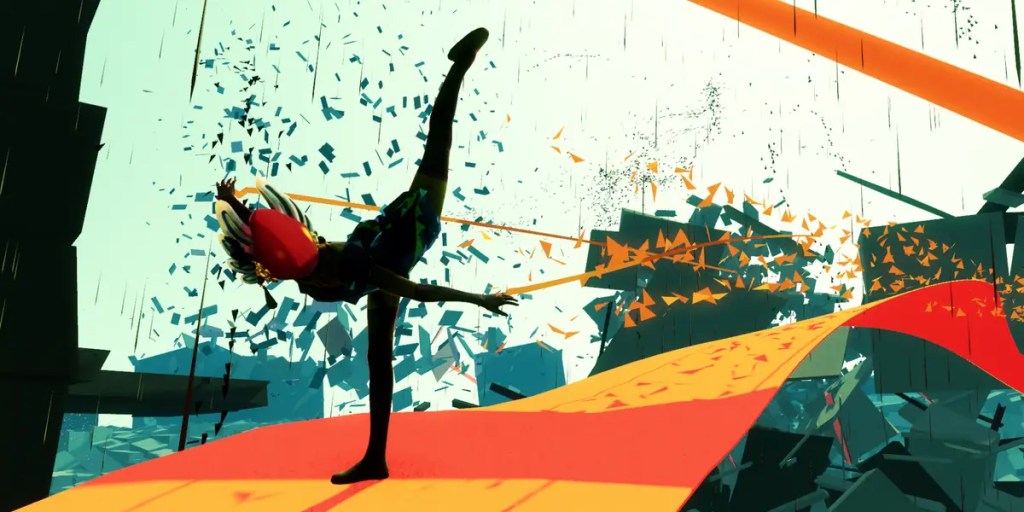
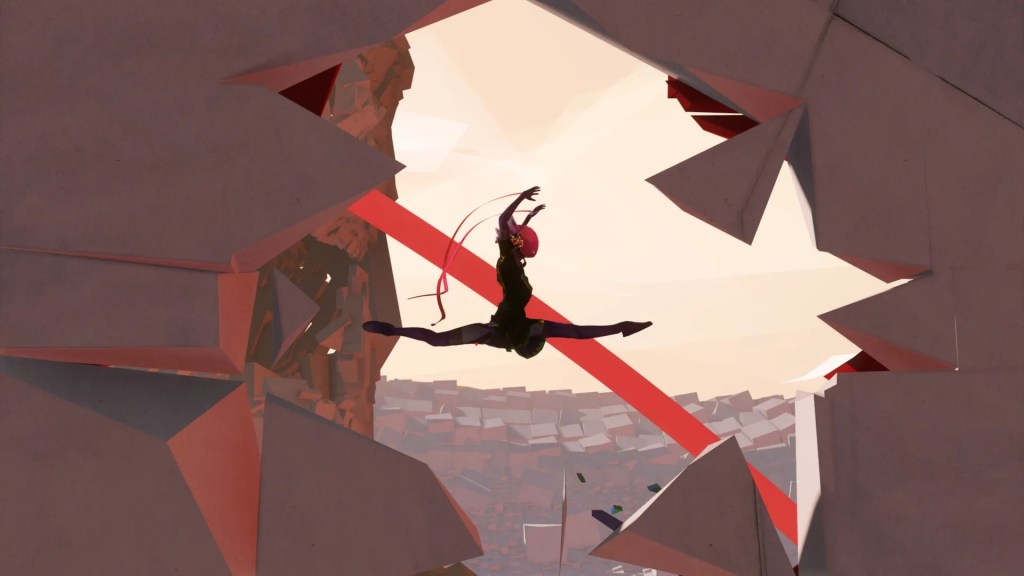
The character dances through the world, all your movements, all the traditional video game mechanics are transformed into this exquisite, balletic performance. You can press various buttons as you move the joystick in order to move in certain ways, leaping, gracefully sprinting, spinning, all of which helps you to navigate the world. There’s a simple genius to it, as the core movement of the game is only that of a basic platformer but the style and setting carries it to another level. A particular favourite of mine is being able to shimmy across ledges by being ‘on point’ i.e. that thing ballet dancers do when they step quickly on their toes. The way you dance through a setting that shape-shifts as you move through it only goes to show how important art style is in game design, and how style and mechanics overlap far more than any of us care to admit.
The Details:
The setting provides a uniquely abstract backdrop through which to move, wonderfully pitched to the overall tone of the experience. The game is hugely metaphorical, and flicks between the pregnant woman on the beach and the dreamscape of her experience. It seems especially suitable then that the game itself allows you to move in this fluid, metaphorical way through conceptual space. The constructs and blocks rise and collapse simultaneously, moving between short, sharp platforming sections and wide open spaces to glide through, reminiscent of sections of ‘Abzu’ or ‘Shadow of The Colossus’.
Above all, it’s a game that rises and falls in pace, and it knows how to keep you interested in the stylistics. Each section or area ends in a section of you gliding across a high rail in such a way that it feels like flying, soaring over the area you’ve just gone through. There’s even a kind of combat system, as you face off against various malignant, black shapes that threaten to swarm you like little paper airplanes. The antagonistic figures generally represent the domestic tension between her parents that she witnessed as a child, mentally processing it through the abstract in a way that only children remember how to do. It only goes to show how vital movement is in gaming, and that how you move though a world is so fundamental to how you experience a game.

The Question of Movement:
I had the same conundrum when originally playing ‘The Witcher 3: Wild Hunt’, I loved the setting, gameplay and combat etc. the same as every single other person in the world, but I never quite got over how awkward the protagonist ‘Geralt’ felt to move. It brought the experience down from that cerebral level and into one of very minor, background frustration. Conversely, one of my weirdly favourite parts of the critically acclaimed ‘The Last of Us’ series was watching the characters move. They sway through the world and seem to react to parts of it that even the player hasn’t noticed, walking, shuffling, going down stairs and climbing in a way that felt legitimately human – therefore making the word seem legitimately human, legitimately real.
It might just be me. This is after all my fourth coffee of the day, following a spectacular display where I managed to spill laundry detergent over the carpet of my rented flat.
It’s just that movement, especially in an abstract sense, is not often something we consciously consider, but it seems that when we sit down to play a game we automatically assess our place in that world and what it feels like to be existentially ‘in’ that place. So when you get a game like ‘Bound’ that so articulately expresses an original, and joyful idea of that unconscious process, there’s a synergy that feels mobile, creating genuinely memorable moments as a player. The setting, the story and the movement are all one thing, and you feel that being conveyed to you as you sweep over this colourful, shapeshifting landscape while a serene piano soundtrack floods your senses to the point where all you can do is sit back and just let it take you with it.
A short yet poignant game with heart wrenching ambiance and a beautiful concept at its heart, ‘Bound’ remains to this day a personal favourite of mine, reminding me that the most important things in life are often the ones that remain unnoticed.
Other Bits:
(‘Bound’ – Plastic Studios, Santa Monica Studio, 2016 / trailer: https://www.youtube.com/watch?v=aE37l6RvF-c)
(‘Abzu’, Giant Squid, 2016)
(‘Shadow of The Colossus’, Team Ico, Japan Studio, Sony Interactive Entertainment, 2005.)
(‘The Witcher 3: Wild Hunt’, CD Projeckt, CD Projeckt Red, 2015.)
(‘The Last of us’, Naught Dog, 2013)


 stghostycreative.co.uk
Leave a comment