
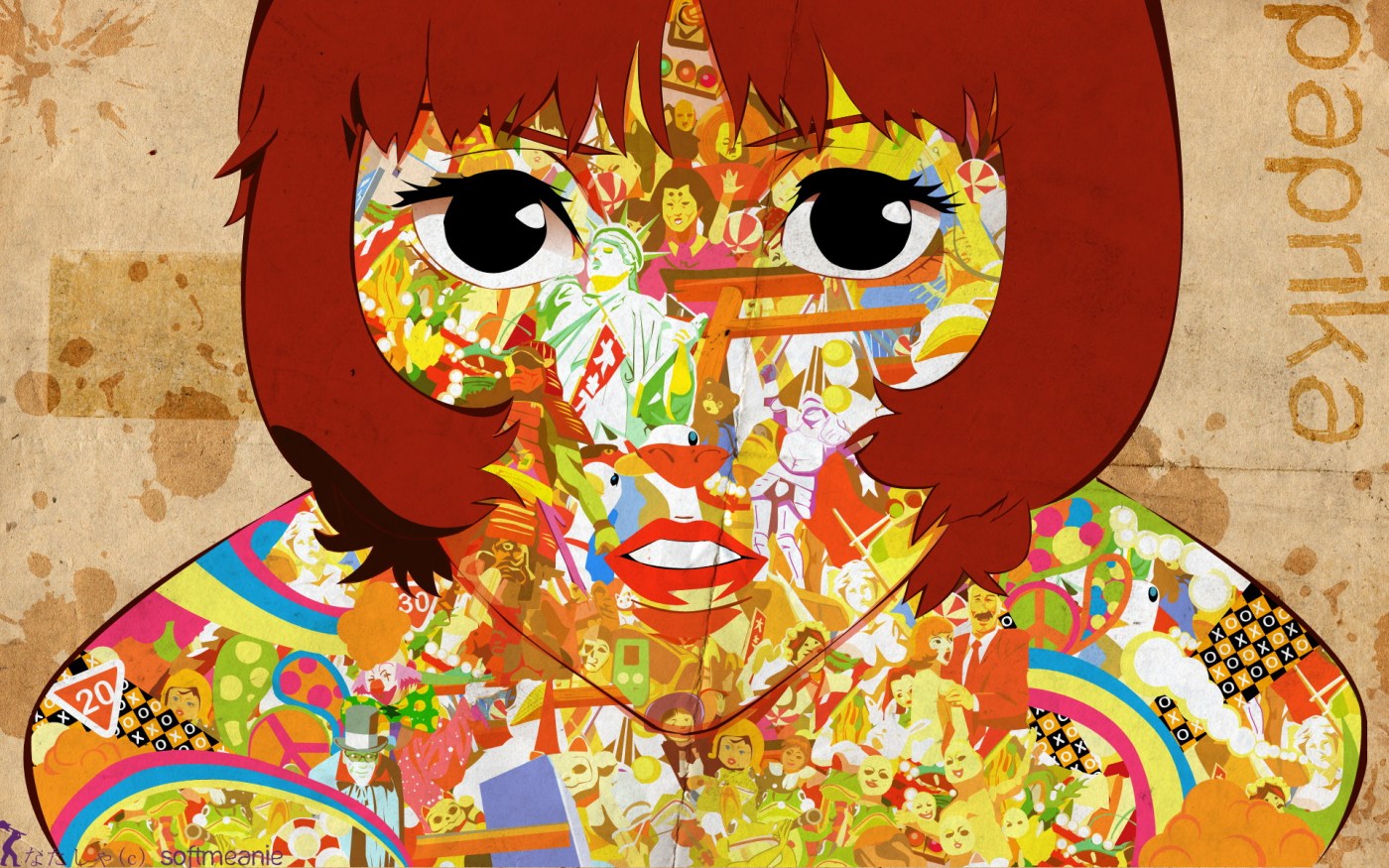
Our obsession with dreams is ancient. They are like water. Unsurprisingly fragile and yet indescribably deep.
Our obsession drives us. To internalise our fascination until dreaming becomes part of who we are. It all goes full circle. Our inner machinations, through subconscious means, returns to its origin and so the processed information dials back to our consciousnesses to be re-learnt and embraced once more. We see our reflections in the water, and we try to hold their hand.
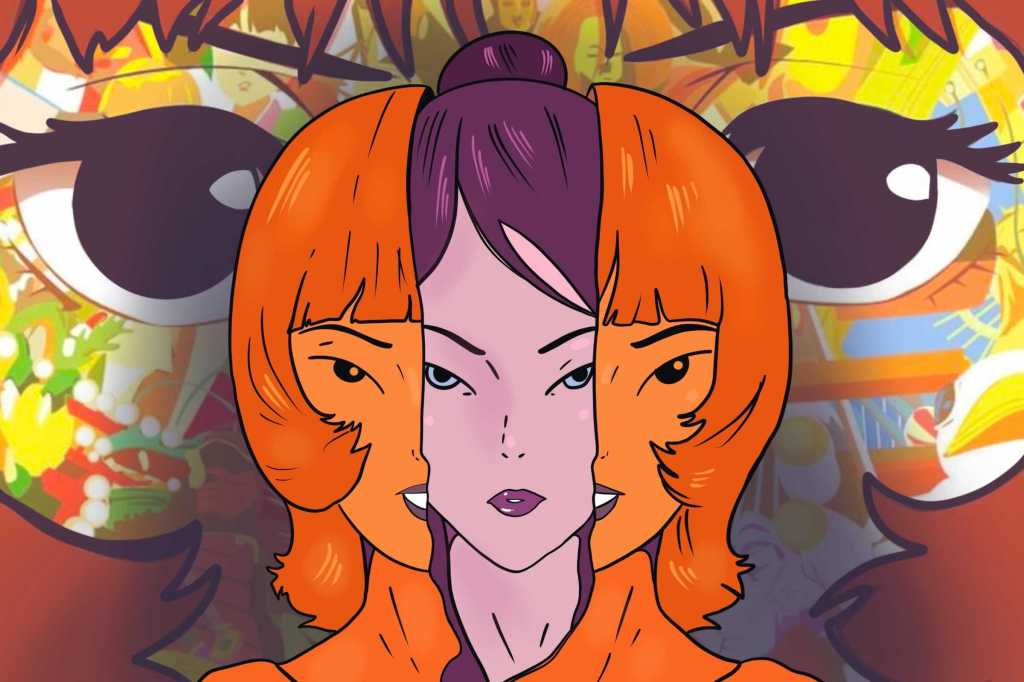
Despite someone telling you they had a really weird dream usually being a portent of an incoming 15 minute story while you’re trying to leave for work – it’s still a topic of the utmost fascination. Especially when it comes to art. I try to avoid delving into any inane discussion that accidentally pops us into the café with Breton and his gang of snail painters – it’s so easy to get privileged with this stuff. But that’s what stops us seeing the democracy of automatic and dream-inspired art. Countless artists devote themselves to interpreting or representing dreams in some medium or another. This of course, is especially true with surrealism.
Originating in the study and representation of dreams, without the conflicting restrictions of cultural logic and analytical necessity. The original surrealists would set up offices and invite people in to discuss their dreams and potentially represent them on the page or the screen, in a dedicated, deliberately parallel to Freud’s psychoanalytic techniques but we won’t hold that against them. Even as the genre has changed over the past century, dreams (or rather, the subconscious) remain highly significant to the surreal.
It is essential in the construction of the narrative, and what elevates it from a school of stylistics to it’s very own creation dialect. More importantly, long long before Parisian cafes, the art of cultures worldwide has relied on dreams and symbols as innately connected to conscious experience.
One of your first thoughts already might be the 2010, science fiction blockbuster Inception by Christopher Nolan. A famously dream oriented film, following the journey of near-future conmen invading the dreams of others but getting lost in the complexity of it all – a film relying on mind-bending physics and wild visuals.
But what if I told you Inception is actually based on a Japanese novel turned anime from 15 years before? Now we’re talking.
‘Paprika’ (2006) is an anime film directed by Satoshi Kon (based on the novel of the same name by Yasutaka Tsutsui in 1993) in which a parallel present has resulted in the invention of a device that allows one to see into other’s dreams. We follow Dr. Atsko Chiba (Megumi Hayashibara) who by day uses the machine as a psychotherapist and by night adapts the persona of ‘Paprika’ as a detective in the very same dreams. When one of the devices is stolen, reality and the world of dreams threatens to collide with devastating consequences.
Now I’m not saying inception is stolen property. What we have are two films/ stories very close in theme and style. However the set, prop, visual departments and directors of photography for Inception all cited this film as a key influence. So why?
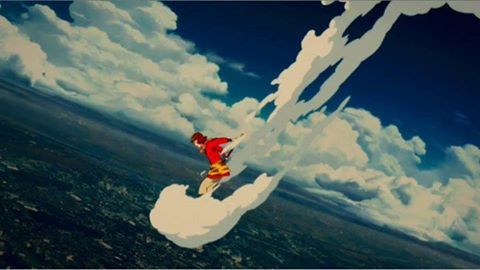
It’s fantastical. The very beginning of the film places us in the nightmares of one of the central characters (Detective Konakawa – voiced by Akio Ôtsuka) and delves further into a sequence of dazzling realities following the genres of different films. The next title sequence, which follows Paprika/Chiba traversing the city through posters and mirrors is just as breath-taking.
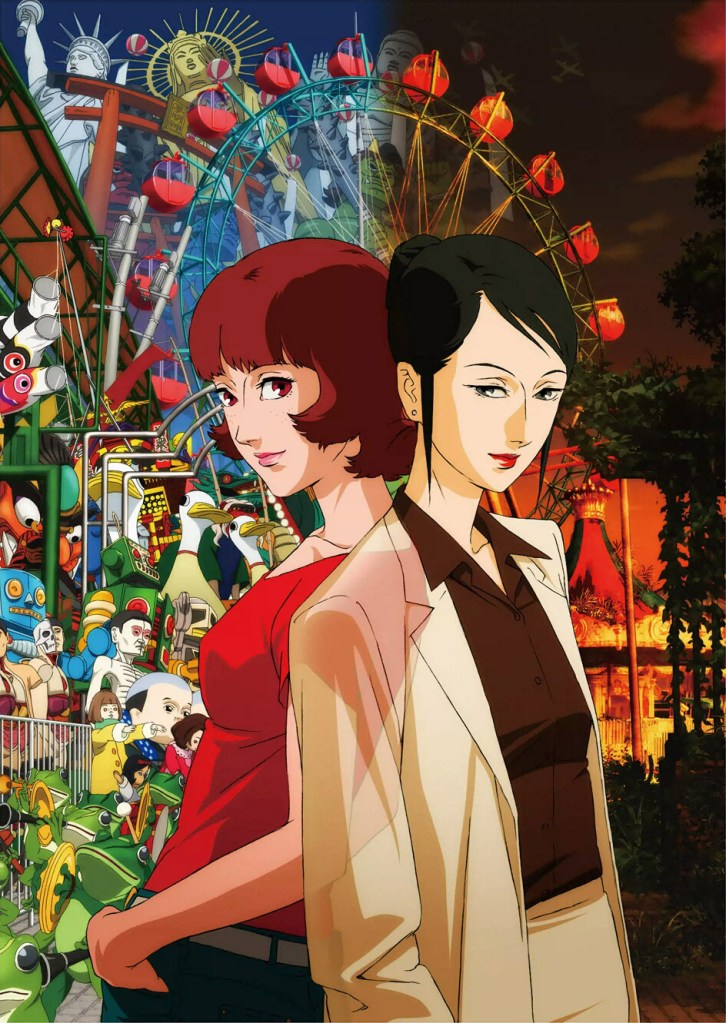
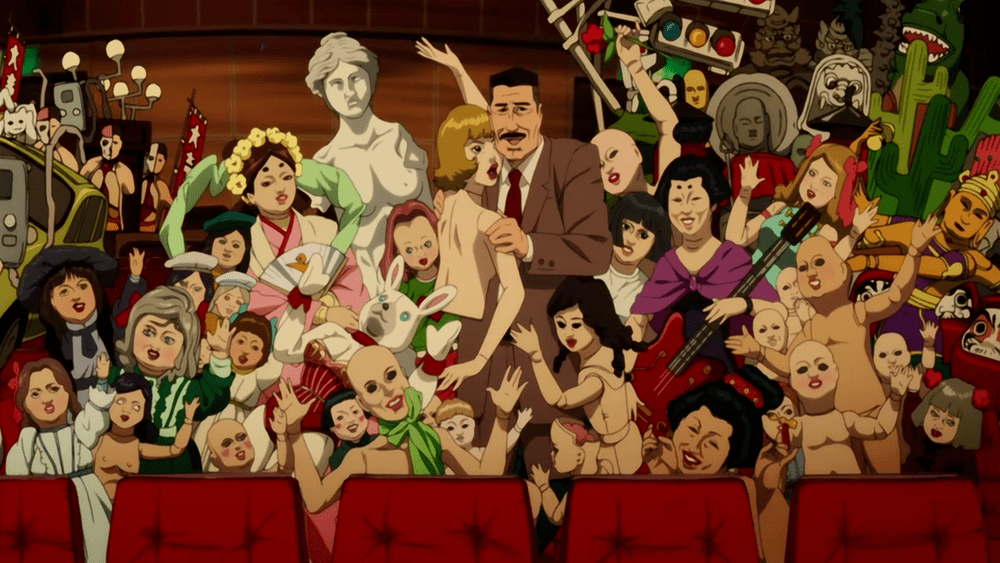
Kon is known for bringing vast worlds to life, with previous titles like Perfect Blue and Paranoia Agent, he’s renowned for weaving simple stories into fascinatingly detailed worlds. The animation is spectacular, but not only that – it’s specific. Kon’s camera angles and scene cuts are sharp and the animation is used to immerse the viewer into the incredible sequences through which we follow the characters. Other scenes of note include the parade sequence – a carnival of inanimate objects, samurai, knights, dolls, fridges (you name it, and it’ll appear) clustered together and marching through into the real world. The scenes and the rich colours are detailed enough so that their surreal nature doesn’t confuse, but rather invites. This is crucial in a film where the boundaries of the ordinary are so easily broken, and the film creates a world that seamlessly transitions between the two – presenting an exploration of reality that simply feels like looking from side to side rather than making any monumental leap. The film’s beauty conveys a certain sense of wonder, that as a viewer you can’t help but admire.
The experience never felt like it wavered from it’s core themes and explores them in satisfying depth. Take Detective Konakawa for example, much of his story arc revolves around (as well as trying to catch the so called ‘dream thief’) trying to uncover the source of his nightmares, delving into a stylistic and sometimes poignant exploration of his past. This exploration is reminiscent of that same psychoanalytic urge to not only explore dreams but to also interpret them. Even if dreams are only the repeating sequences of processed information, we’re still fascinated by the potential of creativity from this place.
So many artists rely on our dreams as direction for movement, for creativity, for accessing alternate plains of reality. As much as there’s a real difference between Aldous Huxley sat on his own in a motel off his tits on mescaline and David Lynch meditating with his coffee and pie, all schools of though agree on a core point, and expand from beyond that. That dreaming is the repetition of information that hasn’t been conscious, and has the potential to be.
That, more than anything as artists and humans, is exciting.
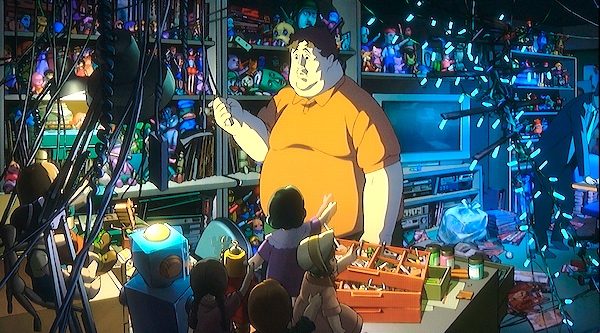
I think it’s important as well not to ignore the basic human relationships that lay at the centre of the film, deep within the dreams and the fantasy. It speaks to not only a childish wonder in all of us, but also to a distinctly ‘adult’ part too. It speaks to our guilt and fears, as well as our hopes. The Konakawa story line as previously mentioned is particularly effective in this sense – his continual failure to catch the perpetrator of a homicide investigation case as well as the secrets of his past which haunt him – but as are other characters.
The inventor of the device is Kosaku Tokita (Toru Furuya) a child at heart genius who must learn to face his psychological rejection of adult life. As much as the narrative is guilty of summing up a large part of his story around his weight, he does still represent a the conceit of the whole piece – challenging our own imaginations, both marvelling at its potential and knowing its limits.
At one point, Chiba shouts at him for his disregard for precautions surrounding his invention. You feel sorry for him, it’s inevitable – but that’s our fault as viewers for patronising him. Towards the climax of the film, it’s Kosaku who finds their inner strength before any other character. The characters lives are as vital as anything, and that comes across distinctly – all the while proving that surrealism can still covey an emotionally relevant, as well as viscerally experiential work.
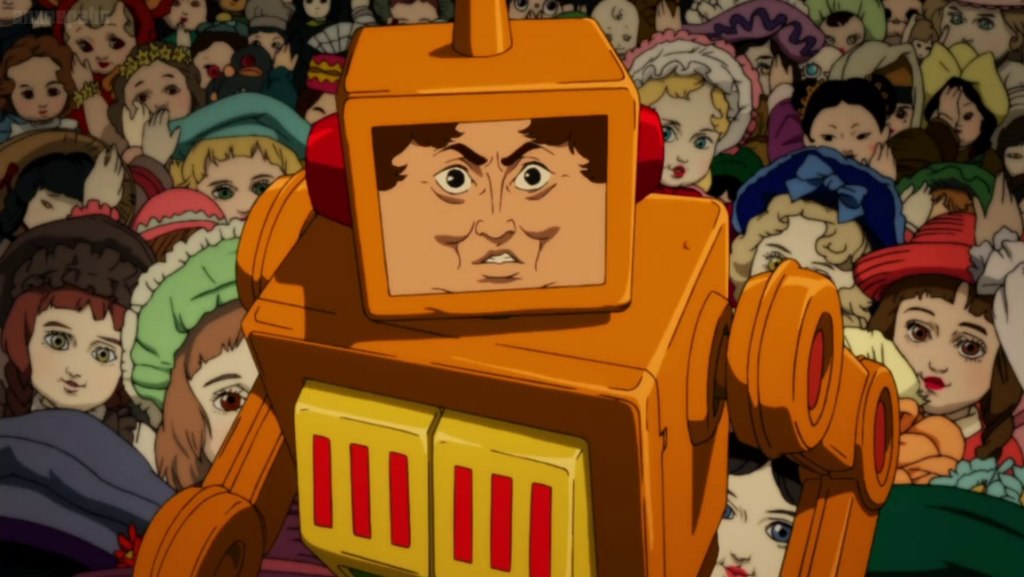
And as much as the film feels positive and cathartic due to the psychoanalytical nature of its narrative, there are plenty of parts that I found frightening on a visceral and base scale. A doll appears frequently in the dreams, laughing in an abandoned theme park as Paprika hunts down the thief, and culminating in a giant version of the dolls screaming so loud that she levels a skyscraper. The dream sequences are packed with symbolism, but the depth behind those symbols are explained. It’s a heavily satisfying process as the dots are joined in a co-effort between the viewer and the narrative. The film doesn’t often leave a stone un-turned and feeds most of the plot to the viewer in quite a conventional sense, but I personally didn’t find this an issue. Instead it felt like learning a new language, one constructed from the dreams and symbols of others; the process of understanding throughout the film only made me love it more and feel a deeper connection to its more surface level magic.
Our dreams define us as much as anything, for they are a production of our experience, intellectualism and biology. As much as our morals, our loves, our faiths and our hatred go to drive us based on metaphysical systems inspired by phenomena, then why is it so much less valid to base some of our drive on how our automatic sense interpret these phenomena.
Automatism in art can allow certain artists to access a sense of freedom in creativity, akin to play – even if the thoughts and information is traumatic or fearful. So even if our more cynical side tells us automatic creation just creates mumble jumble which can intepreted by sheer chance – why does that matter? Is it really healthy to discount automatism and dreams just because we’re too busy holding the image of a lone writer crafting their masterpiece? Even the Chiba must deal with the conflict of not knowing whether Paprika is her alias, or whether she in turn is merely a fragment of Paprika. Her desire to be right and control is laid out in the open by the conclusion of the film, and the resulting experience is one of intense proximity to us as viewers.
So in actuality, is it maybe that we choose? Perhaps it’s ridiculous to compare methodologies as if there’s some ultimate technique. Creativity is inherently automatic. It is, at it’s core, a dream.
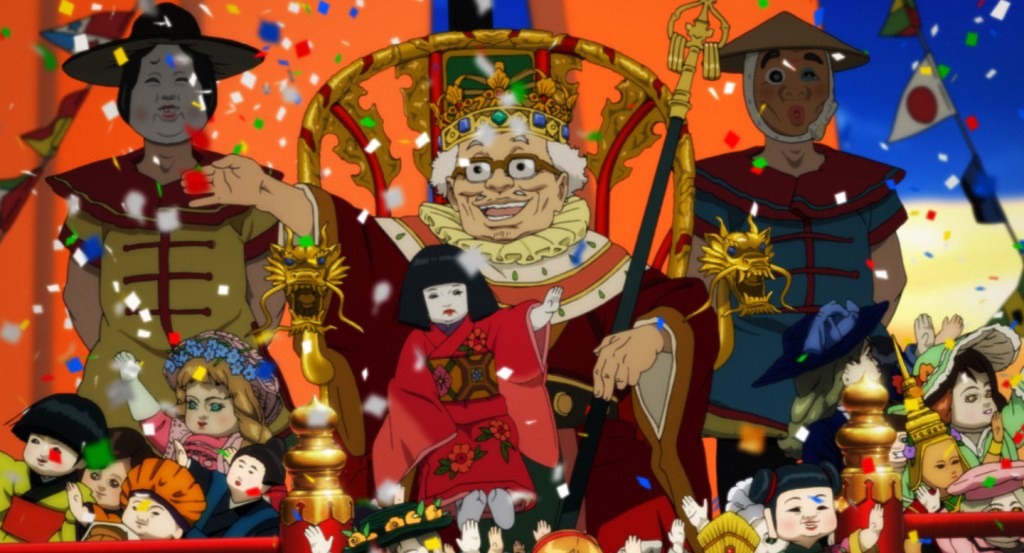
My favourite scene of those fantastic opening titles reflects my attitude to the film in total. It functions on two levels. At it’s heart is a story about people feeling inadequate in some way, yearning for more within their dreams and expressing that symbolically through reality. The human relationships at he heart of it are immensely satisfying because the viewer feels so emotionally close to them – we are uite literally inside their heads. On a second level, this is all represented through a truly surreal, and utterly breath-taking animated universe which is filled to the brim with the very same symbols and manifestations of our inner realities. It’s simultaneously highly stylised, while becoming a work that is fundamentally concerned with humanity. This film reinforces the idea that the interpretation of dreams remains a crucial topic in our lives.
Whatever you think about it – Kon, dreams, writing, French Cafes, honesty – dreams define us. Especially as creatives because it’s all information that’s there. And while it’s always unhealthy to deal in absolutes, perhaps a better us of time would be to ask what’s stopping us from being creative? Is it maybe that automatism, dreams and the creativity associated with their abstractness reveals that we are nowhere near as uninhibited as we’d like to believe? If we’re looking in the water, trying to hold a reflection of our own hand, does it actually matter what side of the water we’re on?
Dreams are unrestricted, unknown, and therefore undeniably captivating – just like this incredible feat of filmmaking by Kon. Whether you try some automatic art yourself, meditation or just feel inspired to have a conversation you wouldn’t usually – just being conscious of potential is a step, even if you decide it’s not for you.
Although I would watch the film. It’s pretty great.


 stghostycreative.co.uk
May 16, 2017 at 1:40 pm
I absolutely love this anime. Satoshi Kon is a master director, because he knows how to layer a film. He understand how it can be an “art”, but he also never forget the experience the audience will have when they watch the movie. He is so mindful so many things that I absolutely love all of his works. It’s a shame he left us too soon leaving one of his works to stay forever in limbo.
I love the Giant Doll sequence. It’s the movie’s climax for me because it also signal Kon going unrestrained with his dream vs reality themes present in all his movies. 🙂
LikeLiked by 1 person
May 16, 2017 at 2:27 pm
Yeah I know exactly what you mean, the film seemed to have this depth to it while still being genuinely entertaining and wonderful to watch.
It is a real shame about him, especially because watching this a few days ago has lead to me watching his other stuff and enjoying it just as much. Just watched Tokyo Godfathers and adored it.
I think that whole bit with the parade towards the end was a fantastic way to climax, like you say, it’s like he becomes completely unrestrained.
I’m also kicking myself, because I completely forgot to mention how much I love the soundtrack too, it’s so infectious and reflective of the film’s tone.
LikeLiked by 1 person
May 17, 2017 at 2:54 am
Oh yeah, I love the ending song. The one with a vocaloid and some Vietnamese lines. It felt perfect for the anime, and feels like an idea Kyon would have.
LikeLiked by 1 person